Every B2B lead generation is only as good as the data source it is built on. Anyone who draws from outdated or legally questionable data burns budget and reputation. But the choice is large: purchased databases, LinkedIn, industry directories, Google Places, and your own web crawling. This comparison evaluates the five most important sources along the four criteria that truly count in the DACH mid-market: coverage, currency, cost, and GDPR compliance.
The five sources at a glance
1. Purchased databases (Cognism, Lusha, and others)
Commercial providers deliver enriched contact profiles including verified email addresses and, in part, phone numbers. The advantage is convenience: you filter, export, and get going. The weaknesses show in the DACH mid-market. Coverage of small businesses is often thin, because the databases concentrate on larger companies and LinkedIn-affine roles. In addition, the prices are considerable, with four- to five-figure annual contracts. Anyone looking for cheaper routes will find concrete options in our article on the Cognism alternative for Germany.
2. LinkedIn
LinkedIn is unbeatable for current roles, job changes, and personal contacts. In the DACH region, however, the platform is not comprehensive: many skilled-trade, retail, and manufacturing businesses in the mid-market are barely present there, if at all. Automated scraping also violates the terms of use and is legally risky.
3. Industry directories
Commercial registers, chamber of commerce directories, and specialized trade directories offer structured company data. They are reputable and often inexpensive, but currency varies greatly, and contacts with contact data are frequently missing. As a base list they serve, as a complete lead source they rarely do.
4. Google Places / Google Maps
Google Places is perhaps the most underestimated source for local and regional B2B leads. Almost every business with a physical presence is listed there, including address, website, phone number, opening hours, and reviews. For the DACH SME landscape, coverage is excellent, and the data is comparatively fresh because companies maintain their profiles themselves. How to use the source concretely is shown in our guide to the Google Places API for lead generation.
5. Your own web crawling
Anyone who deliberately crawls company websites gains deeper signals: legal-notice data, service offerings, technologies, team pages, and buying indicators. The effort is higher, but the result is highly specific and exclusive, because you unlock data that no competitor buys as a standard list. Legally, you stand on more solid ground with publicly accessible company data than with platform scraping.
The direct comparison
| Source | DACH SME coverage | Currency | Cost | GDPR risk |
|---|---|---|---|---|
| Purchased databases | Medium | Medium to high | High (4- to 5-figure/year) | Medium |
| Low to medium | High | Medium to high | High (scraping) | |
| Industry directories | Medium | Low to medium | Low | Low |
| Google Places | Very high | High | Very low | Low |
| Web crawling | High | High | Low (own effort) | Low to medium |
Evaluating the four criteria
Coverage. For the DACH mid-market with its many small and medium-sized businesses, Google Places wins clearly, followed by your own crawling. Purchased databases and LinkedIn mainly cover larger and digitally visible companies.
Currency. Self-maintained profiles on Google Places and live-crawled websites beat static directories. Purchased databases are only as current as their last refresh cycle.
Cost. This is where the biggest difference lies. Google Places and crawling incur minimal costs, while purchased databases quickly tie up five-figure annual budgets. How company data can even be obtained for free is shown in our article on company addresses for free in Germany.
GDPR. Publicly accessible company data such as address, website, and phone number is low-risk, whereas personal data from non-transparent sources is delicate. LinkedIn scraping is the biggest risk. Anyone who works cleanly documents data origin and legal basis from the very start.
The best data source is not the most expensive, but the one that delivers fresh, legally sound data on exactly the target group you want to reach.
The strongest combination for DACH
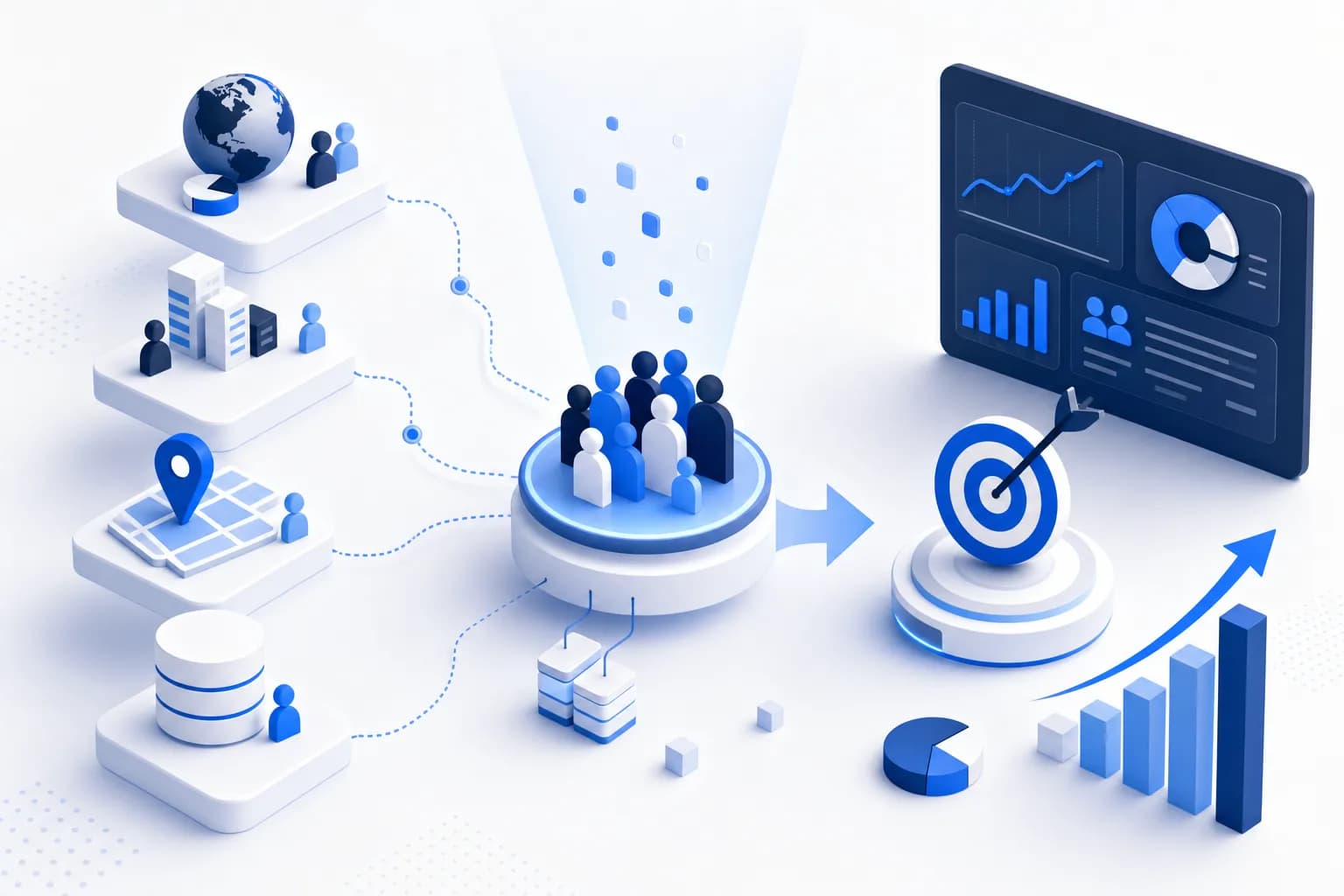
No single source is perfect, but one combination comes very close to the ideal for the DACH mid-market: Google Places as the base, web crawling for enrichment, and AI scoring for prioritization.
- Google Places delivers the broad, current universe of local and regional businesses at minimal cost.
- Web crawling adds contacts, services, and buying signals that are missing in the base.
- AI scoring assesses the enriched leads and puts the most relevant ones at the top, so that the sales team does not drown in raw data.
This chain is inexpensive, legally clean, and better suited to the DACH SME structure than expensive purchased databases. How an AI agent ultimately handles the entire process from research to first outreach is described in our article on the AI SDR in B2B sales.
anilead.io maps exactly this combination of Google Places, enrichment, and AI lead scoring in a single workflow, so that you reach fresh, relevant B2B leads without expensive database contracts.